Switzerland's Multilingual Landscape Shaping Localization Strategies for Browser Puzzle and Action Titles in Regional Online Communities
Tina Schmitz · Oct 15, 2026
Switzerland's Multilingual Landscape Shaping Localization Strategies for Browser Puzzle and Action Titles in Regional Online Communities
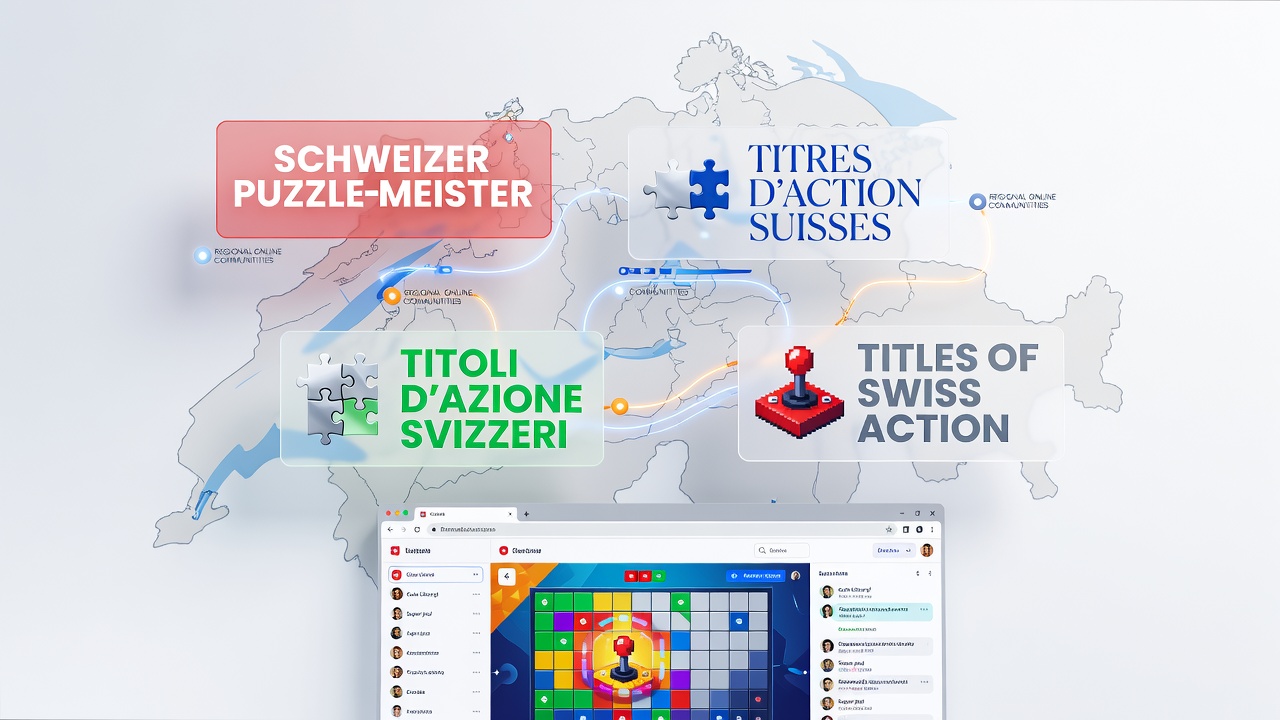
Switzerland maintains four official languages across its cantons and this structure directly influences how developers approach localization for browser based puzzle and action titles that circulate in regional online communities. German dominates in the central and eastern areas while French prevails in the west Italian holds ground in the south and Romansh appears in select eastern valleys and data from the Swiss Federal Statistical Office tracks these distributions through regular census updates that guide content adaptation efforts.
Language Distribution and Its Reach in Digital Play Spaces
Regional online communities form around shared language preferences and developers respond by embedding translation layers that match cantonal boundaries rather than national ones and this approach allows puzzle mechanics to retain cultural references that resonate locally while action sequences receive adjusted audio cues and interface prompts to maintain flow across different linguistic groups. Observers note that communities in Zurich and Geneva often exchange strategies for adapting the same title yet the underlying code must accommodate varying text lengths and idiomatic expressions that arise in each language.
Localization Techniques Applied to Puzzle Mechanics
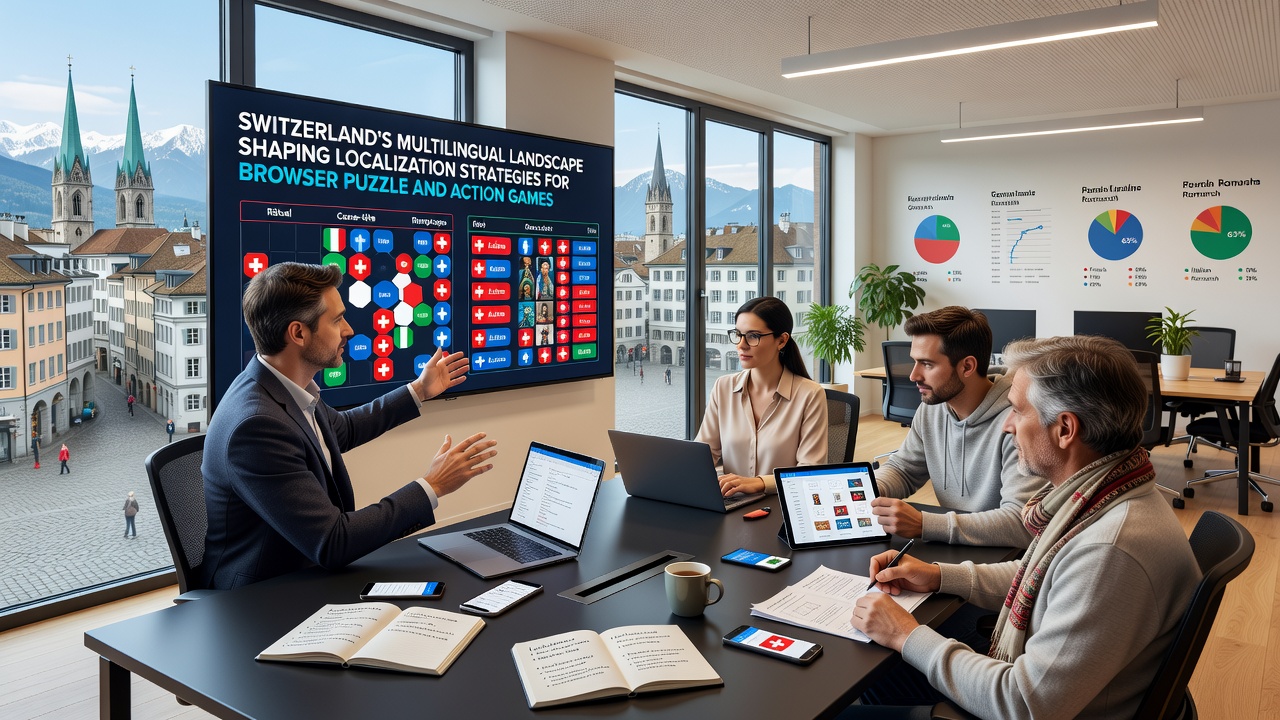
Teams working on browser puzzle titles integrate dynamic string handling systems that swap vocabulary sets based on user locale detection and these systems draw from established terminology databases maintained by Swiss academic institutions to ensure consistency in terms like grid patterns or sequence rules. Action titles incorporate similar frameworks but add timing adjustments for voice lines and on screen prompts because fast paced sequences leave little room for awkward phrasing that could disrupt player rhythm. Researchers at ETH Zurich have documented how these modular systems reduce post launch revisions when titles expand into additional cantons and their findings highlight the value of early integration during initial development cycles.
Community Feedback Loops Driving Iterative Adjustments
Players in multilingual forums provide direct input on translation accuracy and developers track these comments through structured channels that aggregate suggestions by language group and this feedback reveals patterns such as preferred synonyms for puzzle elements in French speaking areas or preferred pacing cues in Italian language action segments. In October 2026 several regional meetups are scheduled to review updated localization tools that incorporate real time community voting on terminology adn these gatherings build on earlier sessions that refined mechanics for cross canton compatibility without altering core gameplay loops.
Technical Frameworks Supporting Regional Adaptation
Browser environments lend themselves to cloud based localization services that push language packs independently of core game files and this separation lets communities test regional variants quickly while maintaining a single code base for updates. Action titles benefit from asset libraries that include region specific sound effects and animation timings whereas puzzle games emphasize text clarity and icon consistency across interfaces. Industry reports from the Interactive Software Federation of Europe indicate that Swiss developers allocate substantial portions of project budgets to these frameworks because the multilingual requirement appears early in planning stages and influences everything from menu design to narrative delivery.
Case Examples from Cantonal Online Groups
One documented project involved a browser action title that adapted its control prompts for three primary languages simultaneously and the development team collaborated with local players in Bern and Lausanne to verify that translated instructions preserved the intended challenge level. Another effort focused on a puzzle series that introduced Romansh support in select levels after community requests highlighted gaps in coverage and the resulting updates demonstrated how smaller language communities can influence broader release strategies when developers maintain flexible systems. These examples illustrate the practical outcomes of treating linguistic diversity as a core design constraint rather than an afterthought.
Future Directions in Cross Regional Title Development
Continued growth in browser gaming platforms aligns with ongoing refinements in machine assisted translation tools that Swiss teams combine with human review panels drawn from each language region and this hybrid method accelerates rollout timelines while preserving accuracy. Data from academic tracking studies shows rising participation rates in localized titles across all four language areas and developers respond by expanding community moderation teams that operate in parallel linguistic streams. The interplay between Switzerland's language map and digital play continues to shape how puzzle and action content reaches its audiences in ways that respect regional identities without fragmenting the overall player base.
Conclusion
Switzerland's multilingual framework provides a concrete model for localization practices that other regions may examine when addressing similar linguistic diversity in browser gaming and the strategies developed here emphasize modular systems, community input, and technical flexibility that keep titles accessible across cantonal lines. Ongoing data collection through official statistical channels and collaborative development efforts ensure that these approaches evolve alongside player preferences and platform capabilities.