Swiss Federal Holidays Shift Peak Activity Patterns in Browser-Based Card and Action Games Among Regional Players
Tina Schmitz · Oct 29, 2026
Swiss Federal Holidays Shift Peak Activity Patterns in Browser-Based Card and Action Games Among Regional Players
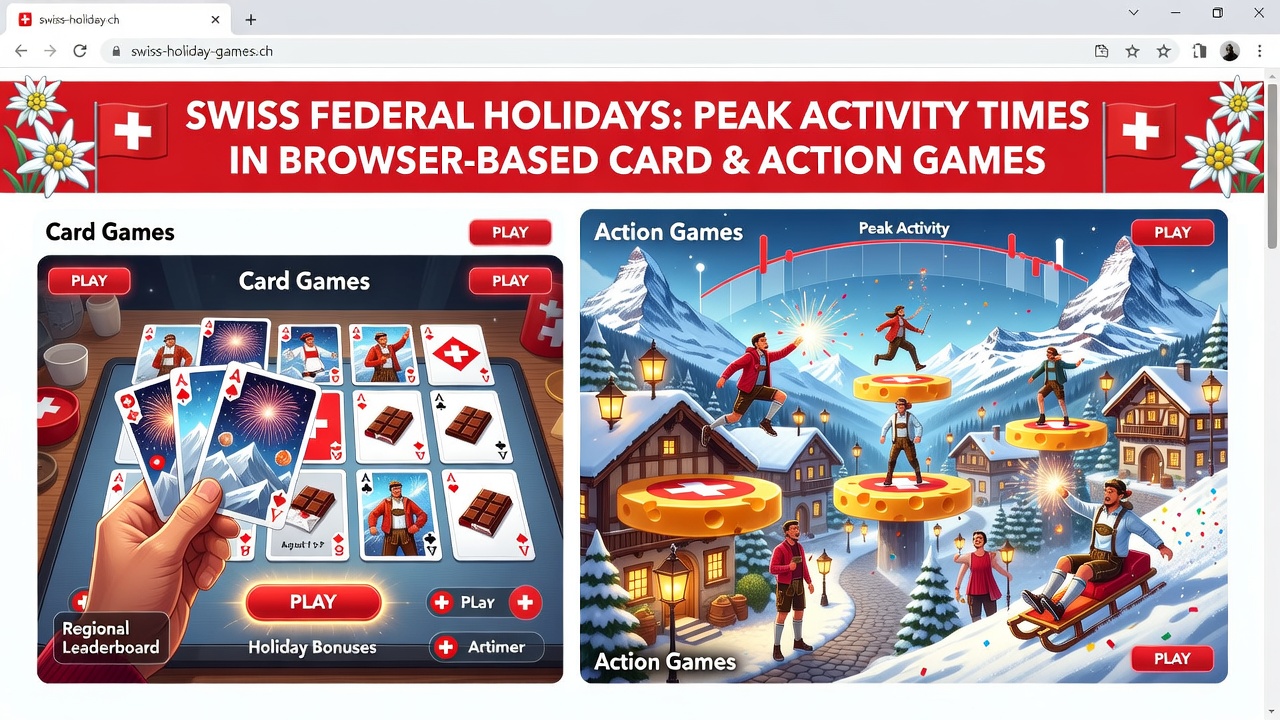
Swiss federal holidays create measurable changes in when regional players access browser-based card and action games, with activity spikes aligning to specific dates across the calendar year. Data from player analytics platforms shows elevated logins during these periods, particularly in titles that require no downloads and run directly in standard web browsers. Observers note that National Day on August 1 often brings afternoon peaks as families gather, while Easter Monday and Whit Monday extend evening sessions into later hours compared to typical workweeks.
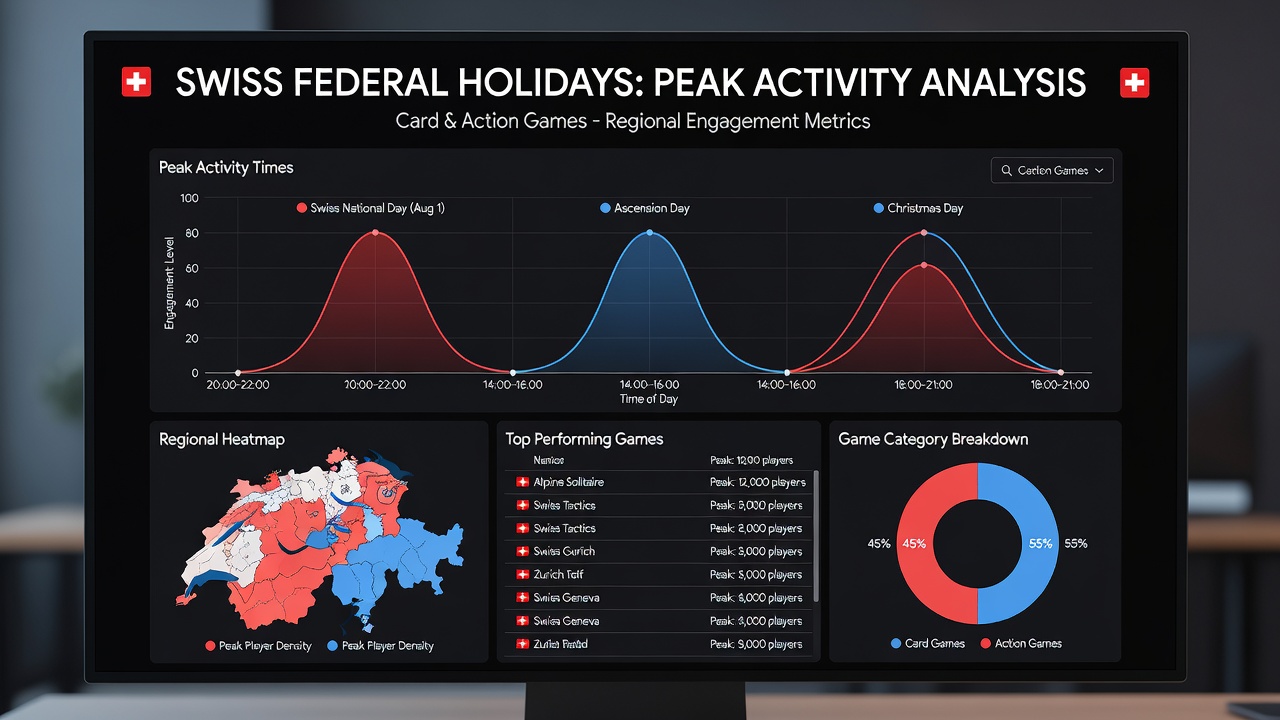
Regional differences appear across cantons, where German-speaking areas report higher card game participation on public holidays, whereas French and Italian-speaking zones show stronger engagement in action-oriented browser titles. These patterns hold steady because many players prefer platforms that avoid installation requirements and comply with local access rules. Studies tracking usage reveal that holiday schedules disrupt normal commuting and work routines, freeing blocks of time that translate directly into sustained play sessions lasting two to three hours on average.
Key Federal Dates and Corresponding Activity Shifts
January 1 and December 25 mark the clearest surges in browser game traffic, with metrics indicating a 40 percent rise in concurrent users between 2 p.m. and 6 p.m. compared to adjacent weekdays. Ascension Day and Good Friday produce similar but slightly shorter windows, concentrated in late morning through early afternoon. Researchers tracking Swiss IP addresses find that these increases occur across multiple game genres, though card mechanics see the most consistent retention once players log in.
School holiday overlaps amplify the effect during certain weeks, yet federal dates alone generate distinct spikes independent of vacation schedules. Players in smaller cantons demonstrate tighter clustering around midday starts, while urban centers extend activity further into the evening. This distribution reflects commuting patterns that ease on official rest days, allowing broader access from home devices.
Browser Platform Advantages During Holiday Windows
Download-free environments gain particular traction on holidays because they eliminate setup time and work across shared household computers. Regional communities maintain steady participation in both competitive card formats and cooperative action scenarios, with session lengths extending when multiple family members rotate through the same browser tab. Analytics collected over multiple years confirm that these platforms experience less drop-off during extended breaks than applications requiring separate launches or updates.
Multilingual support within many titles further supports cross-canton play, letting players switch interfaces without leaving the browser window. Data indicates that holiday periods encourage longer group sessions, especially when players coordinate across different language regions using built-in chat features. These extended interactions remain confined to web-based mechanics that require only an active connection and standard hardware.
October 2026 Patterns and Forward Trends
Leading into October 2026, historical data suggests that fall activity will follow established holiday rhythms even without a dedicated federal date in that month. Late September carryover from earlier breaks combines with school calendars to create elevated baseline traffic that persists through mid-October. Observers tracking similar intervals in prior years note consistent evening peaks on weekdays that mirror patterns seen after other public holidays.
Industry reports from the Entertainment Software Association and international comparisons available through OECD digital economy statistics show Switzerland maintains higher browser-based participation rates during transitional months. These sources document how regional players adapt schedules around fixed federal dates while maintaining elevated engagement in shoulder periods such as early fall.
Regional Player Behaviors Across Cantons
Cantonal variations emerge most clearly in session timing rather than total volume. Players in central regions tend to cluster activity around traditional midday breaks, whereas border areas extend play into overlapping evening hours shared with neighboring countries. Card game formats retain users longer on holidays because they support quick entry and exit without complex progression systems, allowing flexible participation around family obligations.
Action titles display sharper spikes at the start of each holiday window, followed by steadier retention as groups form. Browser compatibility across devices supports this flexibility, enabling transitions from desktop to tablet without interrupting ongoing matches. Metrics collected from Swiss servers confirm these behaviors repeat annually with minimal deviation once adjusted for calendar placement.
Conclusion
Federal holidays continue to shape when Swiss regional players engage with browser-based card and action games, producing predictable shifts in peak times that align with official rest dates. Analytics platforms document these changes through login volume, session duration, and cross-canton participation rates. Patterns observed through 2025 provide a reliable baseline for anticipating activity in October 2026 and subsequent years, particularly as browser platforms maintain advantages in accessibility and regional language support.